Explore Albuquerque: Your Complete Guide to Living in Albuquerque, NM
What is living in Albuquerque, NM actually like?
Living in Albuquerque means mild, sunny weather, mountain views from nearly every part of town, a lower cost of living than most Western cities, and a laid-back pace that still offers big-city amenities. As New Mexico’s largest city, Albuquerque blends a deep Southwestern history with a growing economy in healthcare, research, and technology, making it a strong fit for families, retirees, and young professionals alike.
Why Living in Albuquerque Appeals to So Many People
People move here for a lot of different reasons, but a few themes come up again and again in our conversations with buyers. The cost of housing is more manageable than in nearby states like Colorado and Arizona. The scenery, with the Sandia Mountains rising along the eastern edge of the city, is hard to match. And the pace of life feels calmer than a lot of bigger metros, without giving up hospitals, museums, restaurants, and a real job market.
Whether you grew up here or you’re considering a move from out of state, it helps to understand the basics of the city before you start narrowing down neighborhoods.
Albuquerque’s Geography, Climate & Everyday Feel
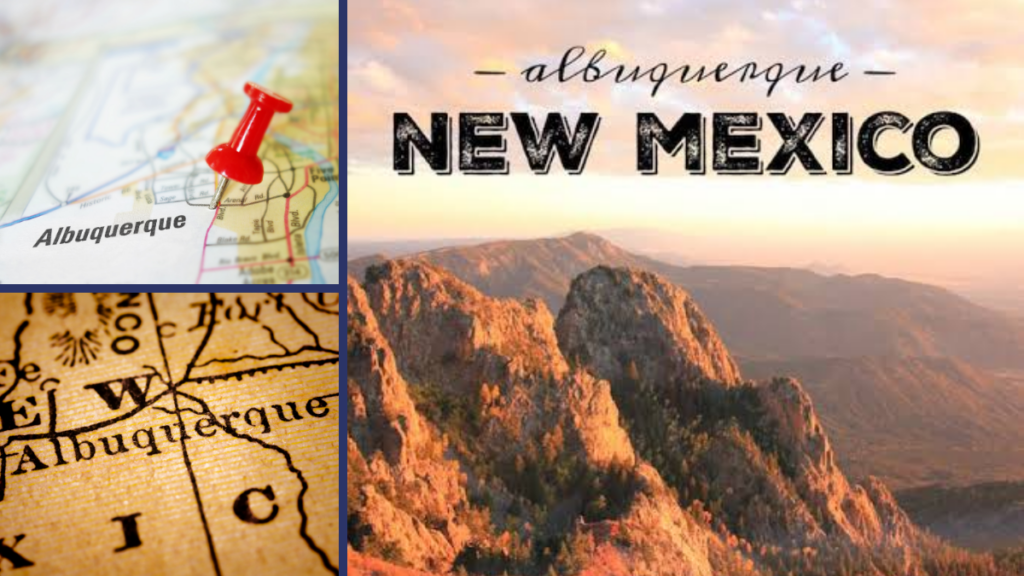
Albuquerque sits along the Rio Grande, between the Sandia Mountains to the east and the Manzano Mountains further south, at an elevation of roughly 5,300 feet. According to Britannica’s entry on Albuquerque, the city sits in a rain shadow created by the surrounding mountains, giving it a mild, dry climate with more than 200 clear days a year.
Elevation, Weather & the High Desert Landscape
Expect warm, dry summers, cool winters with the occasional light snow, and a big daily swing between morning and afternoon temperatures thanks to the high desert elevation. Humidity stays low most of the year, which makes even the hotter summer days feel more comfortable than the same temperature would in a humid climate.
Getting Around: Layout, Commutes & Major Roads
Albuquerque is laid out around a few major corridors, Interstate 25 running north-south and Interstate 40 running east-west, with Central Avenue tracing the old Route 66 path through the heart of the city. Most commutes across the metro run somewhere between 15 and 30 minutes, depending on where you live and work, which is short compared to a lot of larger cities.
How Albuquerque’s Layout Shapes Neighborhood Choice
Because the city stretches across a wide valley rather than clustering around one dense downtown, where you choose to live has a real effect on your daily routine, schools, and commute. It’s one more reason it pays to think through your priorities early rather than picking a home first and figuring out the rest later.
A First Look at Albuquerque’s Neighborhoods and Communities
Albuquerque isn’t one single market, it’s a collection of distinct areas, each with its own character. The Northeast Heights offers established, tree-lined streets close to shopping and top-rated schools. The North Valley has a quieter, more rural feel with larger lots along the river. Downtown and Nob Hill bring walkable restaurants and a younger energy. And just across the Rio Grande, Rio Rancho offers newer construction and some of the best value in the metro. Our Albuquerque neighborhoods guide breaks each of these areas down in more detail, and we’ll be publishing deeper dives into specific communities in the weeks ahead.
Where to Start When You’re New to Living in Albuquerque
If you’re moving here without a strong preference yet, start by mapping out your daily must-haves, commute distance, school zone, or proximity to family, and let that narrow your search to two or three neighborhoods before you start touring homes. It saves a lot of time compared to searching the whole metro at once.
Things to Do: Culture, Food & Outdoor Life in Albuquerque
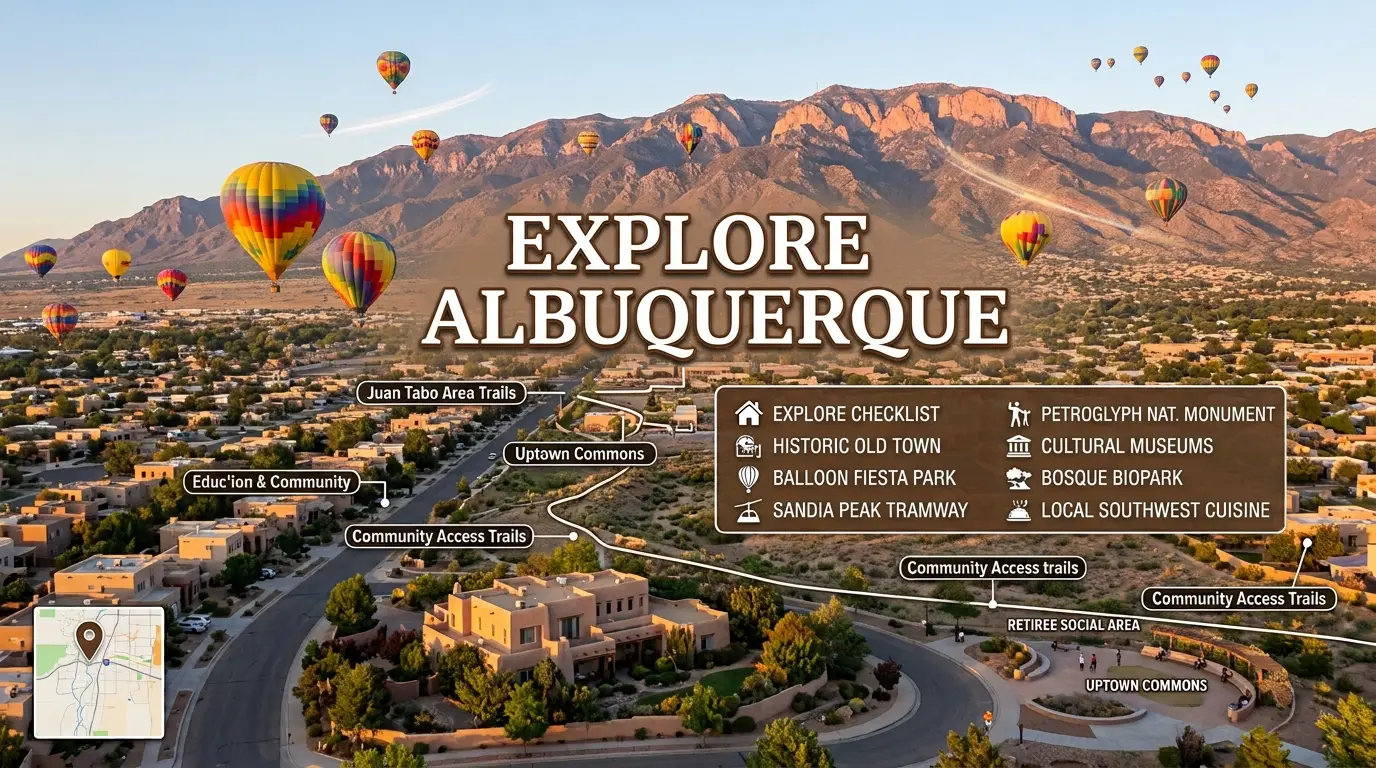
Old Town, founded in 1706, remains the cultural heart of the city, with adobe architecture, galleries, and restaurants built around a historic plaza. The Sandia Peak Tramway carries visitors up to over 10,000 feet for sweeping views of the city and desert below. Every October, the Albuquerque International Balloon Fiesta fills the sky with hundreds of hot air balloons, and it’s one of the most recognizable events in the state. For a full list of current attractions and events, the City of Albuquerque’s visitor page is a good place to check before you plan a weekend.
Outdoor life is easy to build into everyday routines here too, hiking and mountain biking in the Sandia foothills, kayaking on the Rio Grande, and golf courses scattered across the metro all sit within a short drive of most neighborhoods.
Cost of Living and the Local Economy
Albuquerque’s cost of living generally runs lower than comparable Western cities, particularly when it comes to housing. Median home prices in the metro have been running in the mid-$300,000s recently, well below many nearby markets in Colorado and Arizona. The local economy leans heavily on healthcare, higher education through the University of New Mexico, and research and technology work tied to Sandia National Laboratories and Kirtland Air Force Base, giving the city a steadier job base than a lot of comparably sized metros.
Frequently Asked Questions About Living in Albuquerque
Many residents and new movers find Albuquerque appealing for its lower cost of living, mild climate, mountain scenery, and steady job market anchored by healthcare, education, and research employers.
Albuquerque’s cost of living, especially housing, tends to run lower than nearby Western metros in Colorado and Arizona, making it an attractive option for buyers looking for more space and value.
Albuquerque has a mild, dry, high-desert climate with warm summers, cool winters, and more than 200 clear days a year, thanks to the rain shadow created by the surrounding mountains.
Areas like the Northeast Heights and Rio Rancho are popular with families for their established or newer housing stock, proximity to good schools, and generally quieter residential streets.
Albuquerque is New Mexico’s largest city, with more than 560,000 residents. The city is organized around Interstate 25 and Interstate 40, with Central Avenue running through the historic heart of town along the old Route 66 corridor.
Popular activities include exploring Old Town’s historic plaza, riding the Sandia Peak Tramway, hiking or mountain biking in the Sandia foothills, and attending the Albuquerque International Balloon Fiesta each October.
Healthcare, higher education through the University of New Mexico, and research and technology work connected to Sandia National Laboratories and Kirtland Air Force Base form the backbone of the local economy.
The Bottom Line
Living in Albuquerque means trading big-city stress for mountain views, sunny weather, and a genuinely more affordable place to put down roots, without giving up culture, food, or a solid local economy. This guide is just the starting point. Over the next several posts, we’ll take you neighborhood by neighborhood so you can see exactly where you might fit best. We are Jennifer and Vinay Rodgers with The Rodgers Neighborhood Real Estate Group, powered by Real Broker, LLC. With 12+ years of experience helping people move to and around Albuquerque, Rio Rancho, and the surrounding communities, our Albuquerque real estate team is glad to help you figure out where you’ll feel most at home. Reach us at 505-514-5356 or 505-417-2733.

Leave a Reply