What is living in Cedar Crest, NM like?
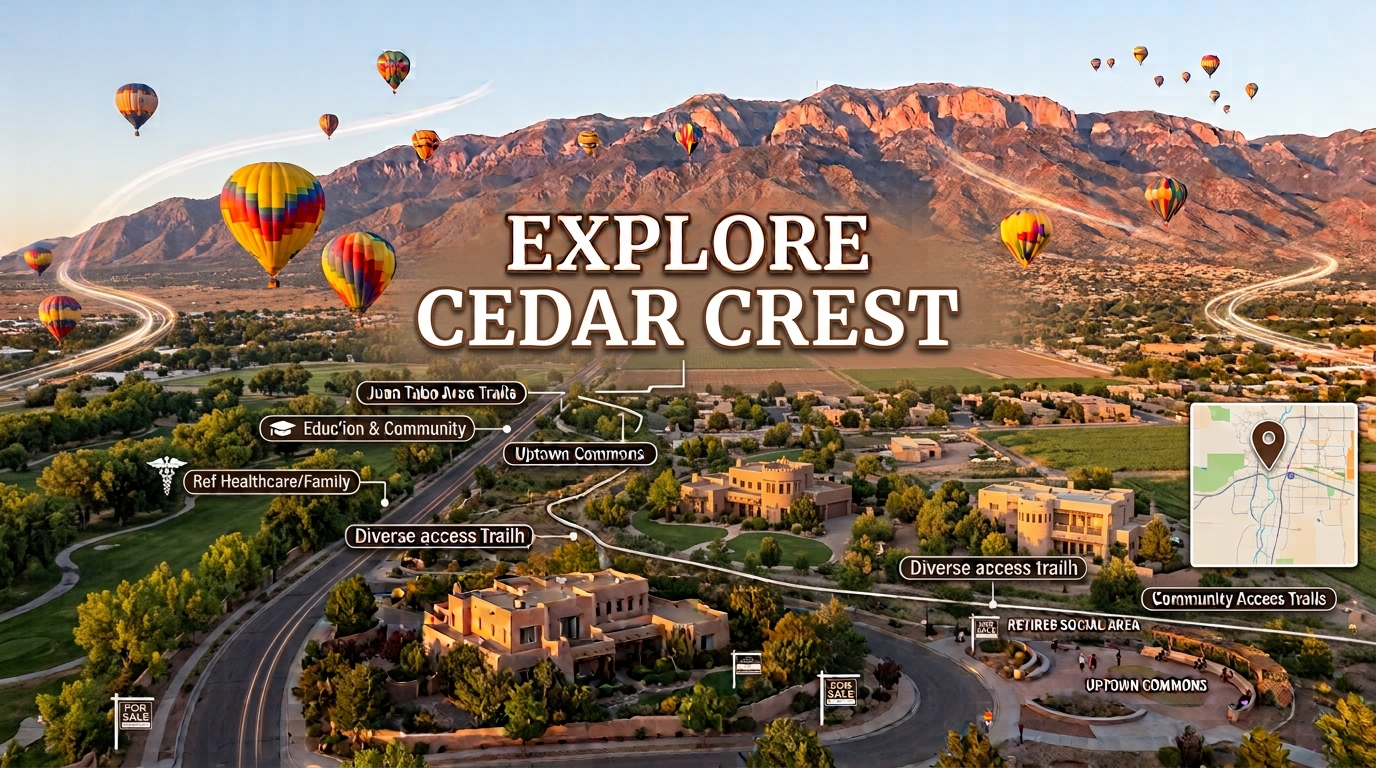
Living in Cedar Crest means tall ponderosa pines, cooler mountain air, and a genuine sense of getting away from it all, while still staying about 20 minutes from Albuquerque. Tucked into the East Mountains along the Turquoise Trail, this small unincorporated community offers a forested, higher-elevation lifestyle that’s hard to find this close to a major city.
Why Living in Cedar Crest Feels Like a Mountain Escape Minutes From the City
Drive up Tijeras Canyon on I-40 and the landscape changes fast, desert scrub gives way to pinon and ponderosa pine, and the air noticeably cools as you climb. That shift is exactly what draws people to Cedar Crest. With fewer than 1,000 residents spread across a compact, wooded area, it keeps a genuinely small community feel, even with the city just down the hill.
For buyers who want trees, elevation, and a slower pace without giving up a reasonable commute, Cedar Crest hits a sweet spot that’s hard to match elsewhere in the metro.
A Community Built Along the Turquoise Trail
Cedar Crest sits right on New Mexico Highway 14, better known as the Turquoise Trail National Scenic Byway, a historic route that winds through the East Mountains on its way toward Santa Fe.
How Cedar Crest Got Its Name
According to the Turquoise Trail’s official history, the community took its name in 1924, when local resident Carl Webb moved the Tijeras post office from the old Canyon Store to his own Cedar Crest Resort. The name stuck, and the mountain retreat that grew up around it eventually became the community residents know today.
Life in the East Mountains Today
Cedar Crest developed in the early twentieth century as a summer retreat for Albuquerque residents looking to escape the heat, and that same appeal still holds today. It’s grown into a full-time community for a lot of residents, but it hasn’t lost the wooded, laid-back character that first put it on the map.
What a Higher Elevation Means Day to Day
Sitting at roughly 6,800 feet, well above Albuquerque’s valley floor, Cedar Crest runs noticeably cooler, especially in summer, and sees more snow in winter than the city below. It’s worth factoring that into how you plan for heating, snow removal, and seasonal driving if you’re used to life in the valley.
Homes and Land in Cedar Crest
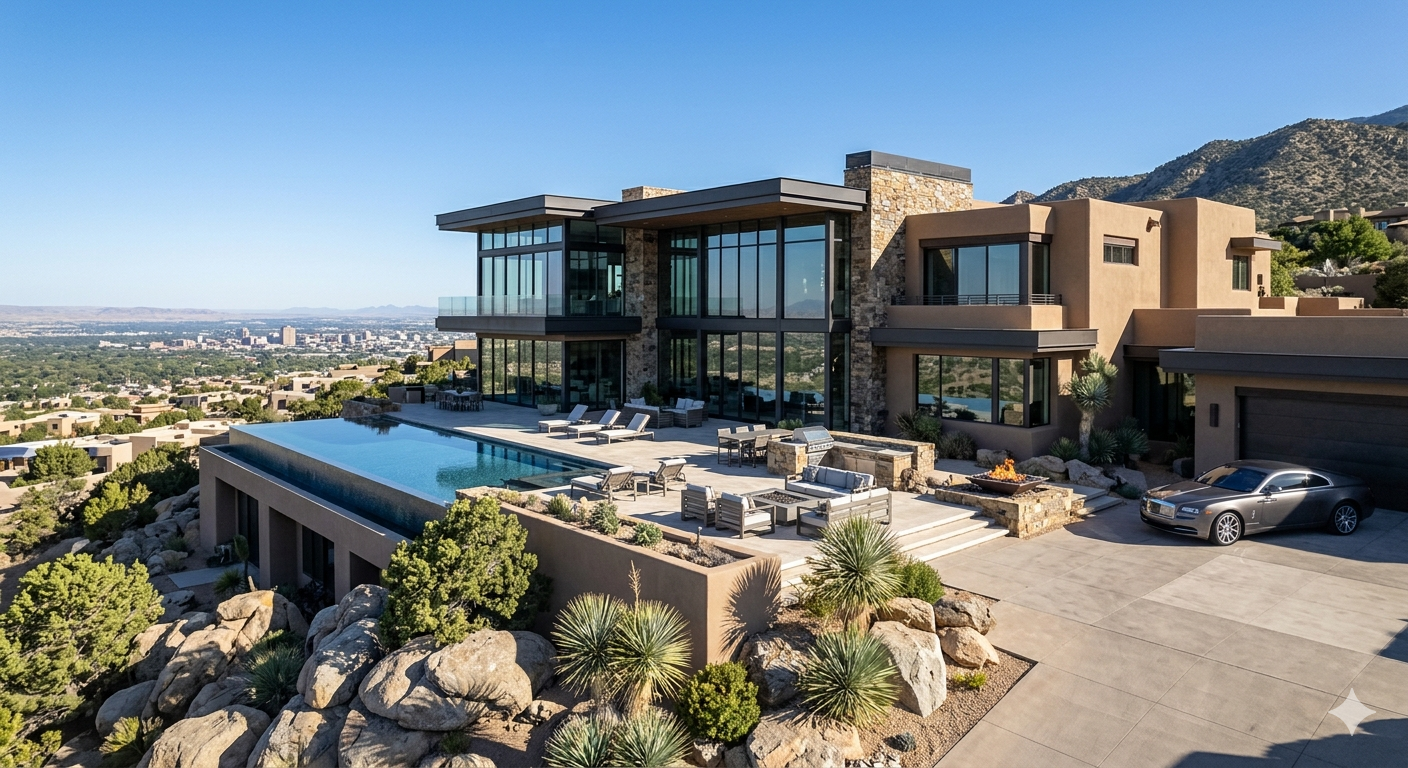
Cedar Crest real estate tends to feature wooded lots, custom mountain homes, and more privacy between neighbors than you’ll typically find in the city. Properties here range from cozy cabins to larger custom builds, often designed to take advantage of the tree cover and mountain views. Our Cedar Crest real estate listings page is a good place to see what’s currently available.
Outdoor Recreation Along the Turquoise Trail
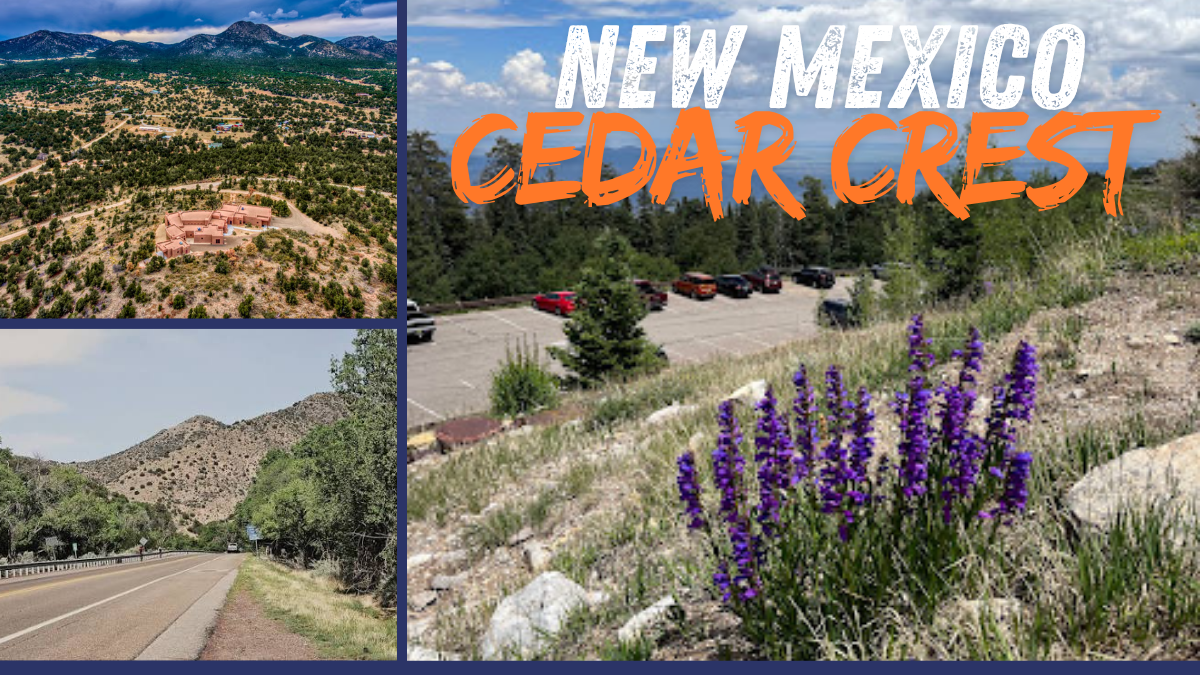
Cedar Crest sits close to the Cibola National Forest and Sandia Ranger District, putting hiking, mountain biking, and access to the Sandia Mountains within easy reach. The Turquoise Trail New Mexico corridor itself is also a popular scenic drive, connecting Cedar Crest with nearby communities, small museums, and mountain towns further north toward Madrid and Santa Fe.
Schools and Commuting
Cedar Crest falls within Albuquerque Public Schools’ East Mountain school zone, which includes elementary, middle, and high school options serving the broader East Mountains community rather than a separate mountain district.
What Living in Cedar Crest Means for Your Commute
Most residents commute into Albuquerque via I-40 through Tijeras Canyon, and the drive typically takes about 20 minutes to reach the east side of the city under normal conditions. Winter weather can slow things down occasionally, so it’s worth keeping that in mind if you’re used to a flatter, more predictable commute.
Frequently Asked Questions About Living in Cedar Crest
No. Cedar Crest is an unincorporated community in Bernalillo County, located in the East Mountains about 15 miles east of Albuquerque along Interstate 40
Cedar Crest sits roughly 15 miles east of Albuquerque, with most commutes into the city running about 20 minutes via Interstate 40 through Tijeras Canyon.
Cedar Crest sits at roughly 6,800 feet, noticeably higher than Albuquerque’s valley floor, which means cooler summers, colder winters, and more regular snowfall than the city below.
Cedar Crest falls within Albuquerque Public Schools’ East Mountain zone, which serves the broader East Mountains community with dedicated elementary, middle, and high schools.
The Turquoise Trail is a National Scenic Byway that runs along New Mexico Highway 14 through the East Mountains, connecting communities like Cedar Crest, Sandia Park, and Madrid on its way toward Santa Fe.
Yes. Cedar Crest is known for wooded lots, more privacy between homes, and a genuinely mountain feel, making it a strong option for buyers who want space and trees without moving far from the city.
Cedar Crest was named in 1924, when resident Carl Webb moved the local post office to his Cedar Crest Resort, and the name has stuck with the community ever since.
The Bottom Line
Living in Cedar Crest offers a genuine mountain lifestyle, cooler air, tall pines, and real privacy, without giving up a reasonable commute into Albuquerque. It’s a strong fit for buyers who want to feel like they’ve left the city behind each evening, even though it’s only about 20 minutes away. We are Jennifer and Vinay Rodgers with The Rodgers Neighborhood Real Estate Group, powered by Real Broker, LLC. As Albuquerque area real estate agents with 12+ years of experience across Albuquerque, Rio Rancho, Corrales, Placitas, Los Ranchos, Bernalillo, Cedar Crest, and the surrounding communities, we’re glad to help you see if Cedar Crest is the right fit. Reach us at 505-514-5356 or 505-417-2733.

Leave a Reply