
We’ve written a lot on this site about why people love it here. This one’s about the parts we usually leave out.
Every place has a sales pitch and a fine print, and Albuquerque is no exception. Lower costs and a genuinely rich culture sit on one side of the ledger. Spring winds that will absolutely ruin a car wash and an altitude that catches newcomers off guard sit on the other. Both lists are real, and neither one cancels the other out.
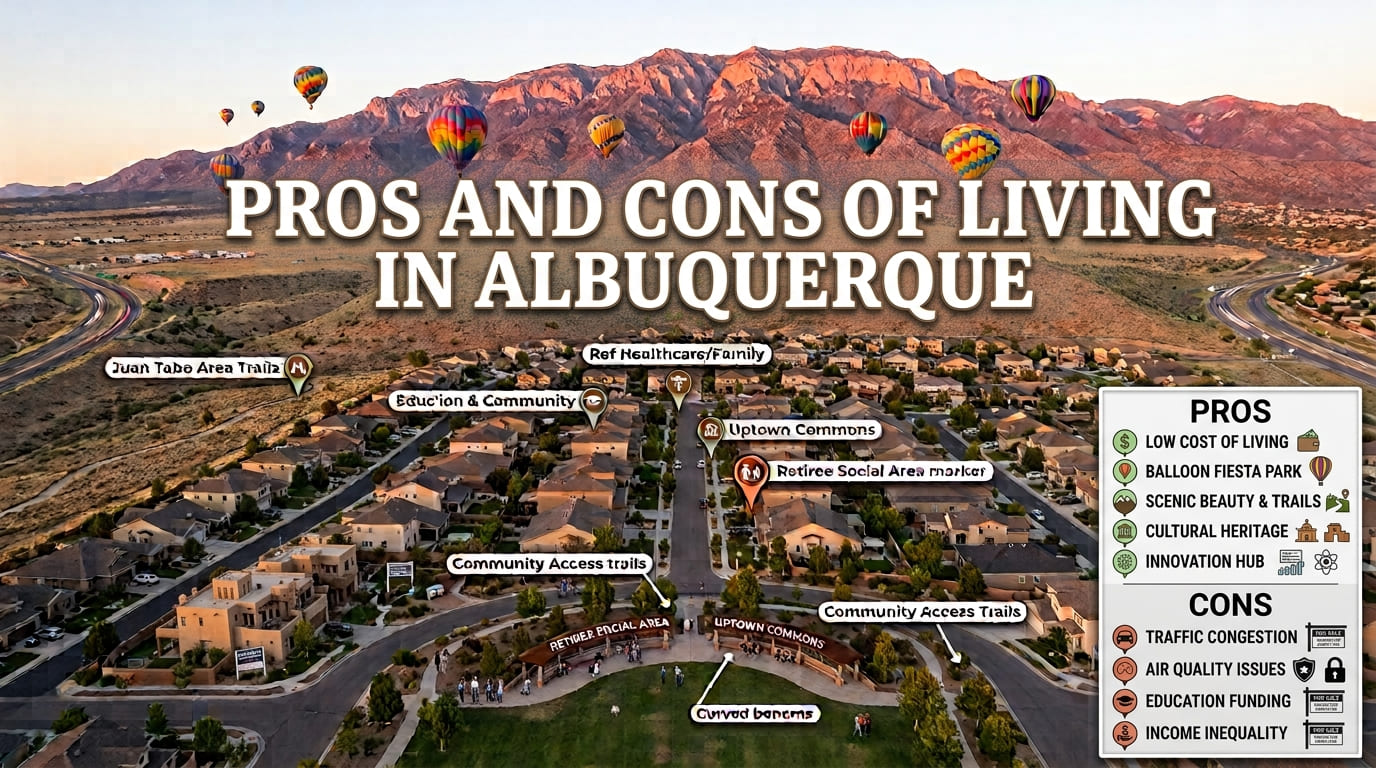
The Real Pros and Cons of Living in Albuquerque, Not the Brochure Version
We’ve already covered the big, obvious trade-offs elsewhere on this site, housing costs, the job market, crime perception, so we won’t rehash all of it here. This is more about the stuff that doesn’t make it into most relocation guides at all: the specific weeks of the year that are genuinely rough, the cultural depth that’s easy to undersell, and the physical adjustment almost nobody warns you about.
What Actually Works Here
Start with the stuff that consistently earns its reputation.
Genuinely Lower Costs, With the Caveat We Already Covered
Housing here still costs meaningfully less than comparable Western metros, and that math holds up even after you account for local wages running below the national median. We’ve broken this down in detail elsewhere on the blog, so we’ll just say: it’s real, it’s not a myth, and it’s the number one reason most people start looking here in the first place.
A Tri-Cultural Identity You Can’t Fake
This is the part that’s genuinely hard to explain to someone who hasn’t lived it. Albuquerque sits at the overlap of Hispanic, Native American, and Anglo cultural traditions that go back centuries, not decades, and it shows up in everything from the food to the architecture to how neighborhoods are laid out. According to U.S. Census Bureau data, people of Hispanic or Latino origin make up close to half the city’s population, one of the highest shares of any major U.S. metro, alongside a significant and visible Native American community. This isn’t a diversity statistic for its own sake, it changes the actual texture of daily life here.
What That Looks Like Day to Day
Practically, it means green chile shows up on everything from breakfast burritos to pizza without anyone blinking, Spanish and English mix casually in the same conversation, and pueblo, territorial, and Spanish colonial architectural styles sit next to each other on the same block. It’s not a curated experience built for tourists. It’s just what the city is.

What Takes Getting Used To
Now the part most relocation guides skip past too fast.
Spring Wind Season Is a Real Thing, Not a Myth
Ask anyone who’s lived here more than a year and “windy season” will come up unprompted. Juniper trees can start releasing pollen as early as December, peaking hard through March and April, and that same stretch regularly brings sustained wind gusts of 55 to 70 miles per hour, according to National Weather Service Albuquerque data. The combination kicks up genuine dust events, not just a breezy afternoon, and it’s the season locals plan patio furniture and car washes around. If you’re moving from somewhere without a real spring wind season, expect it to be the first thing that surprises you.
The Altitude Catches People Off Guard
Albuquerque sits around 5,300 feet above sea level, high enough that people arriving from closer to sea level sometimes deal with a few days of headaches, dehydration, or feeling winded faster than usual on a hike or even just moving boxes into a new house. It’s not dangerous for most healthy adults, but it’s real, and drinking more water than feels necessary for the first week or two genuinely helps.
Frequently Asked Questions About Living in Albuquerque
Most residents point to affordability relative to comparable Western cities, combined with a genuinely deep tri-cultural identity that shapes daily life in ways that go well beyond a typical “diverse city” checkbox.
Spring wind and allergy season tends to surprise newcomers the most, along with a car-dependent layout that we’ve covered in more detail elsewhere on the blog.
For most healthy adults, no, but it’s common to feel mild effects like fatigue, headaches, or shortness of breath during the first week or two after moving from a lower elevation. Staying well hydrated typically resolves it.
Tree pollen, especially from juniper, typically peaks from March through April, though sensitive individuals can start noticing symptoms as early as December or January depending on the year’s weather.
Yes. Albuquerque has one of the highest shares of Hispanic and Latino residents of any major U.S. city, alongside a significant Native American population, giving it a genuinely tri-cultural identity that dates back centuries.
For most people, no. Spring winds and an altitude adjustment period are inconveniences rather than serious obstacles, and both are manageable once you know to expect them.
The Bottom Line
Weighing the pros and cons of living in Albuquerque honestly means holding two things at once: this is a genuinely affordable, culturally rich place to build a life, and it also has a rough few weeks of wind every spring and an altitude that takes some getting used to. Most people who move here decide pretty quickly that the trade-off is worth it.
We are Jennifer and Vinay Rodgers with The Rodgers Neighborhood Real Estate Group, powered by Real Broker, LLC. If you’re weighing a move, reach our Rio Rancho and Albuquerque agents for a straight answer about a specific neighborhood, or browse Albuquerque neighborhoods to start narrowing things down. Reach us at 505-514-5356 or 505-417-2733.

Leave a Reply