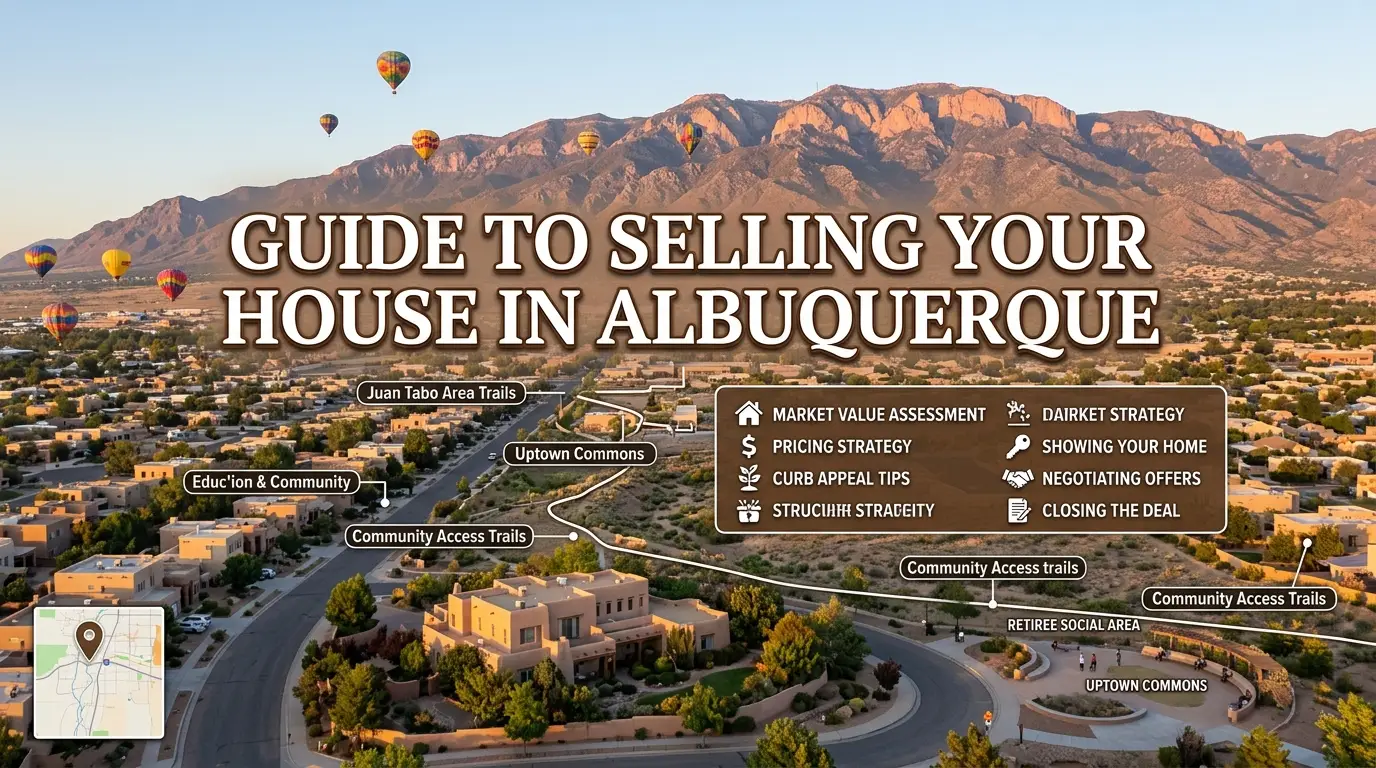
The Complete Guide to Selling Your House in Albuquerque
What do I need to know before selling my house in Albuquerque?
Selling your house in Albuquerque comes down to four things: pricing it accurately using current local data, meeting New Mexico’s required seller disclosures, preparing and marketing the home well, and negotiating the closing process with a clear head. Skip any one of these steps and you risk sitting on the market longer, or worse, running into a legal dispute after closing.
Why Selling Your House in Albuquerque Takes the Right Strategy
Albuquerque’s market has cooled from the frenzy of a few years ago. Well-priced homes still move quickly, but a growing share of listings are sitting long enough to need a price cut. That shift means sellers can’t just list at last year’s number and expect multiple offers, pricing and preparation matter more than they did during the height of the post-pandemic market.
Whether you’re selling a starter home in the Southwest, a family home in the Northeast Heights, or a property in Rio Rancho, the fundamentals below apply across the metro.
Step 1: Price Your Home Using Current Albuquerque Data
Pricing is the single biggest factor in how fast your home sells and how close to asking price you end up.
Getting an Accurate Comparative Market Analysis
A comparative market analysis, or CMA, looks at recently sold homes similar to yours in size, condition, and location, not just the whole city average. Neighborhood-level data matters here: a home in a competitive pocket of the Northeast Heights can support a very different price per square foot than a similar home in a slower-moving part of the metro.
Avoiding the Most Common Overpricing Mistake
The most common mistake we see is pricing based on what a seller needs or hopes to get, rather than what the current data supports. Overpriced listings tend to sit, then require a price cut anyway, and by that point buyers often assume something is wrong with the home rather than the price.
How Price Reductions Affect Buyer Perception
Once a listing has been on the market for several weeks, buyers start to wonder why. Even a well-maintained home can pick up a stigma just from sitting too long, which is exactly why getting the number right from day one matters more than trying to leave room to negotiate down.
Step 2: Understand New Mexico’s Seller Disclosure Requirements
New Mexico requires sellers of residential property to complete a written Seller’s Property Disclosure Statement before entering into a purchase contract, a requirement enforced by the New Mexico Real Estate Commission under state administrative code. Getting this right matters, both for a smooth transaction and to protect yourself from a nondisclosure dispute after closing.
What You’re Legally Required to Disclose
Sellers must disclose known material facts about the property’s condition, and New Mexico law separately requires that buyers receive an estimated property tax levy for the property before an offer is accepted. If you learn something new about the property between signing the disclosure and closing, you’re required to update it, this isn’t a one-and-done form.
Lead-Based Paint and Other Federal Disclosures
If your home was built before 1978, federal law requires an additional lead-based paint disclosure, along with an EPA pamphlet and a 10-day window for buyers to conduct their own lead inspection if they choose. A lot of Albuquerque’s older neighborhoods fall into this category, so it’s worth checking your home’s build date early in the process rather than scrambling right before closing.
Step 3: Prepare and Market Your Home
Simple, cost-effective updates, fresh paint, decluttering, and basic curb appeal, still deliver the best return relative to what they cost. A pre-listing inspection can also help here: catching and addressing issues before a buyer’s inspector finds them means fewer surprises and fewer renegotiations later in the process. Professional photography and a strong online listing matter too, most buyers are scrolling through photos online long before they ever schedule a showing.
Step 4: Negotiate Offers and Manage Closing
Once offers start coming in, price isn’t the only thing worth comparing, financing terms, contingencies, and proposed closing timelines all affect how solid an offer actually is. From there, expect an inspection period, appraisal if the buyer is financing, and a handful of negotiation rounds before you land at the closing table. Typical Albuquerque closings run around 30 days from an accepted offer, though it can move faster with a cash buyer.
Most sellers benefit from many of the resources our guide to Albuquerque’s communities covers when it comes to positioning a home within its specific neighborhood market, since buyer expectations vary quite a bit block to block.
Capital Gains Tax When Selling Your House in Albuquerque
Most sellers won’t owe federal capital gains tax on the sale of a primary residence, thanks to the Section 121 exclusion. Under IRS Topic No. 701, single filers can exclude up to $250,000 of gain, and married couples filing jointly can exclude up to $500,000, as long as you owned and lived in the home for at least two of the five years before the sale. If your profit is likely to exceed those thresholds, it’s worth talking to a tax professional before you list, not after you close.
Frequently Asked Questions About Selling a House in Albuquerque
Yes. New Mexico requires sellers to complete a written Seller’s Property Disclosure Statement before entering a purchase contract, and to update it if new material facts come to light before closing.
Well-priced homes in competitive neighborhoods often go under contract within one to two weeks, though the full process from listing to closed sale typically runs closer to a month once negotiations, inspections, and financing are factored in.
Most sellers don’t. The IRS allows single filers to exclude up to $250,000 of gain, and married couples filing jointly up to $500,000, as long as the home was owned and used as a primary residence for at least two of the previous five years.
Failing to disclose a known material defect can expose you to a nondisclosure lawsuit after closing. New Mexico allows sellers to mark items as “unknown” in good faith, but knowingly omitting a defect is treated as misrepresentation.
It’s not required, but many Albuquerque sellers find it worthwhile. A pre-listing inspection surfaces issues you can address on your own terms, rather than having them discovered, and potentially used as negotiating leverage, by a buyer’s inspector.
Overpricing based on last year’s comps or personal expectations rather than current neighborhood data. It typically leads to a longer time on market and a price cut anyway, often with less negotiating leverage than pricing correctly from the start.
It’s not legally required, New Mexico allows private sales without a broker, but most sellers benefit from an agent’s help with pricing, disclosure compliance, marketing, and negotiation, especially in a market where pricing mistakes are costly.
The Bottom Line
Selling your house in Albuquerque doesn’t have to be stressful, but it does reward preparation. Accurate pricing, complete disclosures, smart preparation, and a clear-eyed approach to negotiation are what separate a smooth sale from a stalled listing.
We are Jennifer and Vinay Rodgers with The Rodgers Neighborhood Real Estate Group, powered by Real Broker, LLC. With 12+ years of experience and 480+ properties sold across Albuquerque, Rio Rancho, and the surrounding communities, we handle the pricing, disclosures, and negotiations so you don’t have to guess. Reach us at 505-514-5356 or 505-417-2733, or get in touch here for a free home valuation.

Leave a Reply