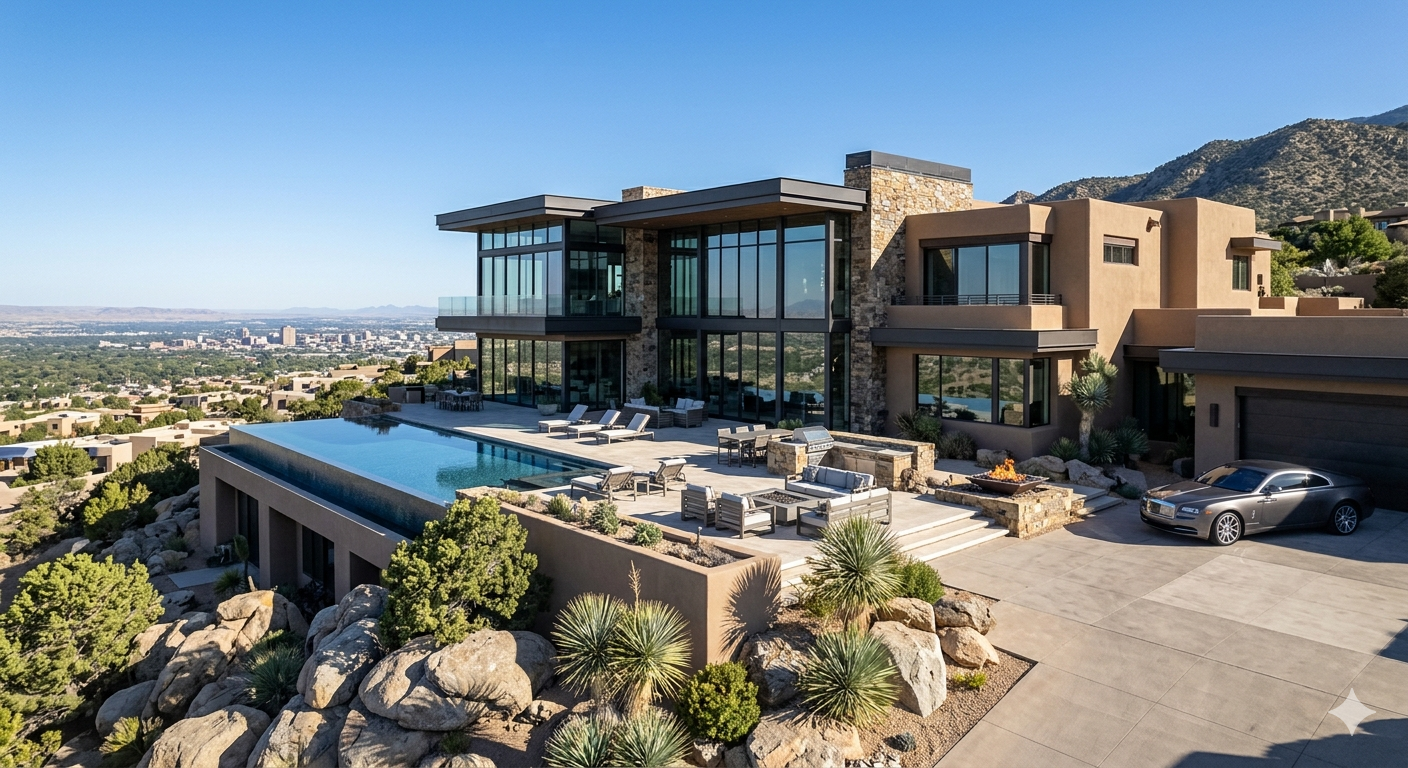
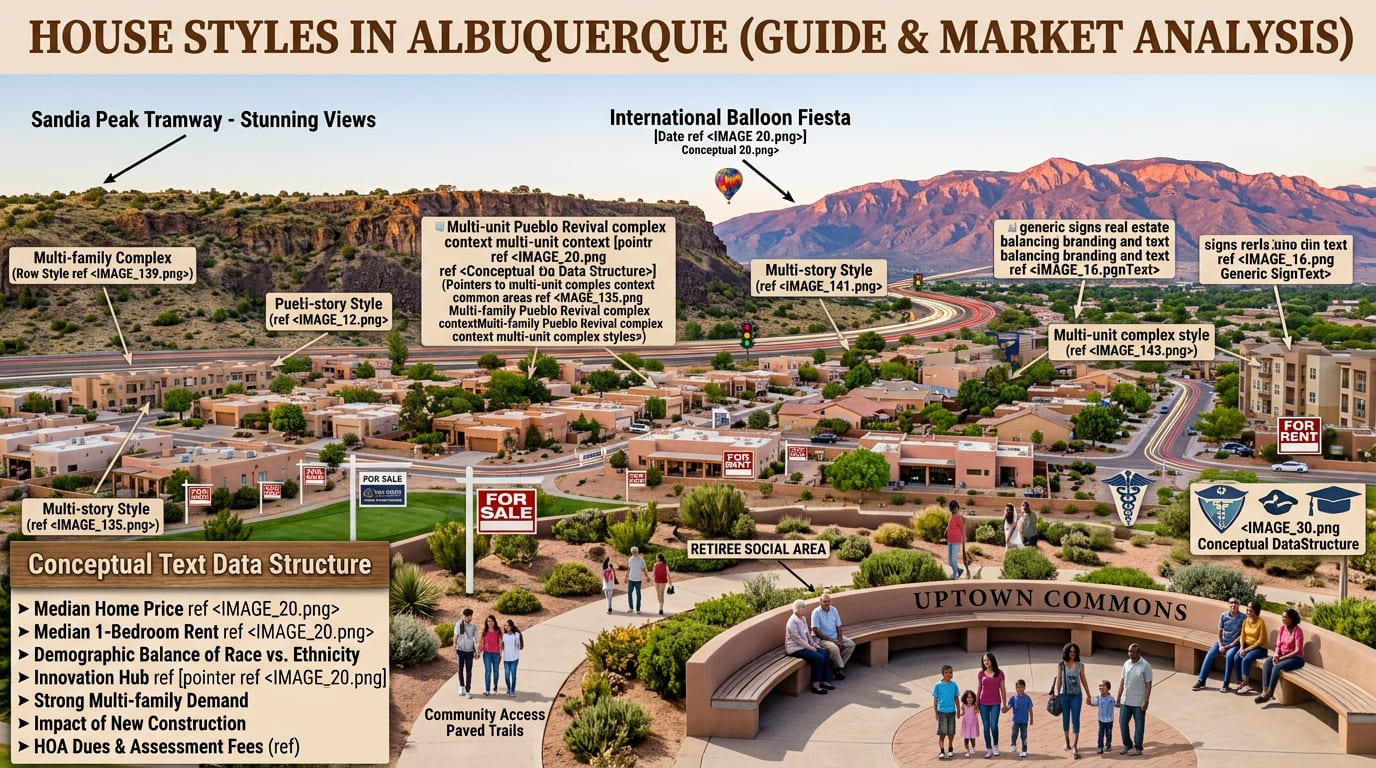
Mostly variations on two related styles, Pueblo Revival and Territorial Revival, plus the modern stucco version of both that’s gone up across new subdivisions for the last fifty years.
What’s genuinely surprising is how much of that vocabulary traces back to one man who arrived in New Mexico in 1920 to recover from tuberculosis and ended up defining what “New Mexican architecture” even means.
What Are the Typical House Styles in Albuquerque, and Where Did They Come From?
Walk through almost any established Albuquerque neighborhood and you’ll see the same handful of design languages repeating: flat roofs, rounded or battered walls, exposed roof beams, and earth-toned stucco. None of that happened by accident, and most of it traces back to a specific set of design decisions made in the early 20th century, not centuries of unbroken tradition, even though it looks that old.
The Man Who Basically Invented Albuquerque’s Architectural Vocabulary
Architect John Gaw Meem came to Santa Fe in 1920, a young man being treated for tuberculosis, and stayed to become, as regional historians describe him, the 20th century’s chief historian, preservationist, and visionary for Southwestern architecture. He designed 35 buildings on the University of New Mexico campus alone, and his fingerprints are on nearly every “classic” adobe-style building people associate with this state today.
Pueblo Revival: Building Off 1,000 Years of Precedent
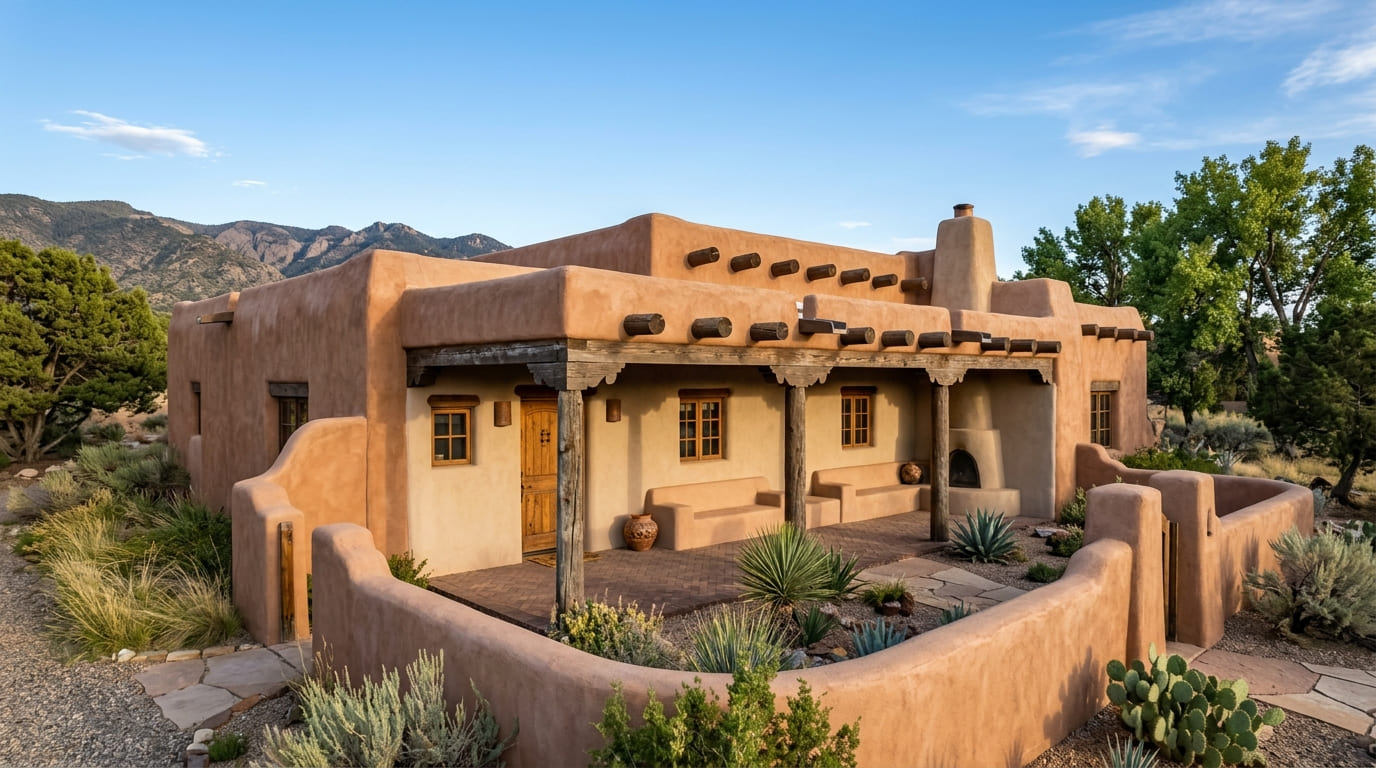
Pueblo Revival draws directly from the hand-formed mud architecture of the region’s original Puebloan communities: stepped massing, battered (gently sloped) walls, rounded parapets, and projecting vigas, the wooden roof beams that stick out through the exterior wall. According to New Mexico Magazine, Meem studied these forms more deeply than any architect of his generation, sometimes modeling his designs directly on centuries-old mission churches.
Territorial Revival: Meem’s Own Albuquerque Invention
Territorial Revival is the style Meem essentially built for Albuquerque specifically, developing it between 1932 and 1934 because, as he reportedly put it, he didn’t think Albuquerque had its own architectural vocabulary the way Santa Fe did. Territorial Revival layers Anglo-American classical details, pediments, columns, brick coping along flat rooflines, sash windows, on top of the same adobe and Pueblo forms, a genuine hybrid that reflects New Mexico’s actual layered history rather than picking one influence.
You Can Still See Both Styles at Los Poblanos
Meem built both a Pueblo Revival hacienda and public buildings side by side on the same property at Los Poblanos, in Los Ranchos, and by most accounts it’s where he genuinely cemented Territorial Revival as its own recognizable style. Nob Hill picked up the trend too, dozens of Territorial Revival residences there date to the neighborhood’s original 1920s-through-1950s development boom.
The Modern Version: “Faux-Dobe” and Southwestern Stucco
Most homes built in Albuquerque today aren’t actual adobe brick, they’re conventional wood-frame construction finished in stucco to mimic the look, a style regional writers affectionately, and sometimes critically, call “faux-dobe.” It’s the honest reality behind most of the “adobe-style” listings you’ll see: earth-toned stucco, flat or low-pitched roofs, rounded corners, and the occasional decorative viga, built for cost and code compliance rather than mud brick and timber the way Meem’s original buildings were. The New Mexico Museum of Art’s own architectural curriculum traces this evolution clearly, from genuine Pueblo and Spanish forms through Meem’s revival movement to today’s stucco-clad descendants.
Mid-Century and Ranch: The Other Half of Albuquerque’s Housing Stock
Not every Albuquerque home follows the Pueblo or Territorial playbook. A huge share of the city’s postwar growth, particularly through the Northeast Heights, went up in straightforward ranch-style homes, single-story, low-pitched roofs, attached garages, built fast and affordably during the city’s biggest population boom. Genuine mid-century modern homes, with clean lines, large windows, and flat or butterfly rooflines, show up in smaller pockets too, generally built by architects and builders influenced by the broader national mid-century movement rather than the regional revival styles.
Spotting the Typical House Styles in Albuquerque Block by Block
In practice, older, established neighborhoods near downtown and the university tend to show the heaviest concentration of genuine Pueblo and Territorial Revival homes, along with historic villages like Corrales and Bernalillo, where Hispanic and Pueblo building techniques blended most directly. Newer West Side subdivisions lean almost entirely on the modern stucco version, while pockets of the Heights mix ranch homes in with occasional mid-century standouts. Our Albuquerque neighborhoods by architectural style breakdown covers several of these areas individually if you’re hunting for a specific look rather than just a specific location.
Frequently Asked Questions About Albuquerque House Styles
Modern stucco-clad homes drawing on Pueblo and Territorial Revival design, flat or low-pitched roofs, earth tones, rounded details, are the most common style in newer construction, while ranch-style homes dominate much of the postwar Northeast Heights.
Pueblo Revival draws directly from ancient Puebloan adobe forms, stepped massing, battered walls, rounded parapets. Territorial Revival layers Anglo-American classical details, like pediments and brick coping, on top of those same Pueblo and Spanish colonial forms.
John Gaw Meem was an architect who came to Santa Fe in 1920 and became the leading figure behind New Mexico’s Pueblo Revival and Territorial Revival architectural movements, designing dozens of iconic buildings across the state, including 35 on the UNM campus.
No, not typically. Most modern “adobe-style” homes are conventional wood-frame construction finished with stucco to mimic the look of real adobe, sometimes called “faux-dobe” by regional architecture writers.
Nob Hill has a significant concentration of Territorial Revival residences dating to the 1920s through 1950s, and Los Poblanos in Los Ranchos is considered one of the style’s most important examples in the metro.
Yes. Much of the postwar Northeast Heights was developed with straightforward single-story ranch-style homes, distinct from the Pueblo and Territorial Revival styles found in older, more historic neighborhoods.
The Bottom Line
The typical house styles in Albuquerque trace back further, and to a more specific source, than most buyers realize: one architect’s decades-long project to give this region its own architectural identity, still visible today in everything from a century-old adobe hacienda to a brand-new stucco tract home. Knowing the difference helps when you’re touring homes and trying to figure out what you’re actually looking at.
We are Jennifer and Vinay Rodgers with The Rodgers Neighborhood Real Estate Group, powered by Real Broker, LLC. Whether you want a genuine historic adobe or a low-maintenance modern build, talk to an agent who knows the difference. Reach us at 505-514-5356 or 505-417-2733.

Leave a Reply